Presentation
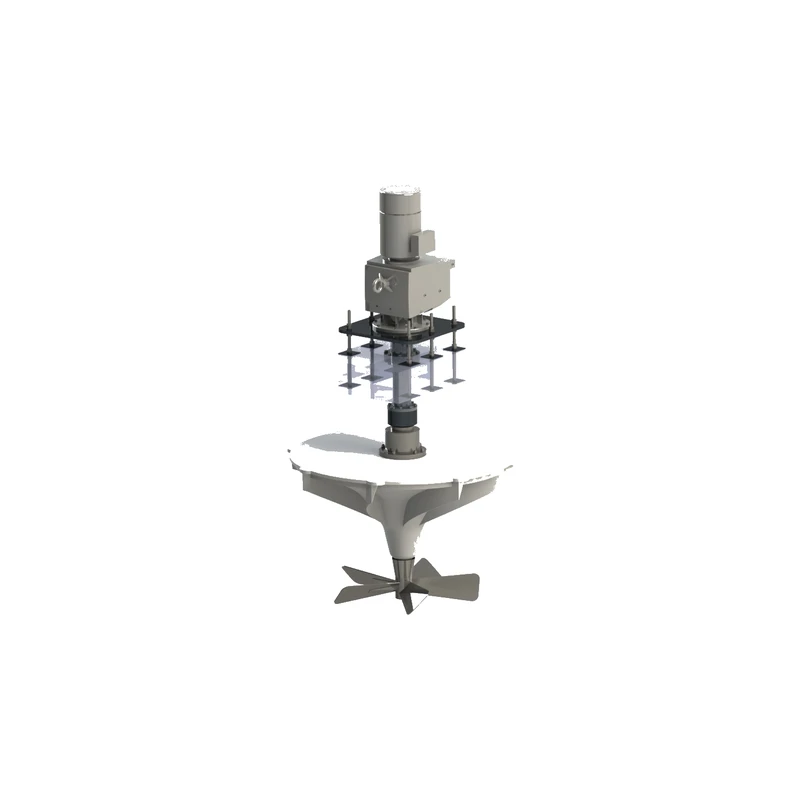
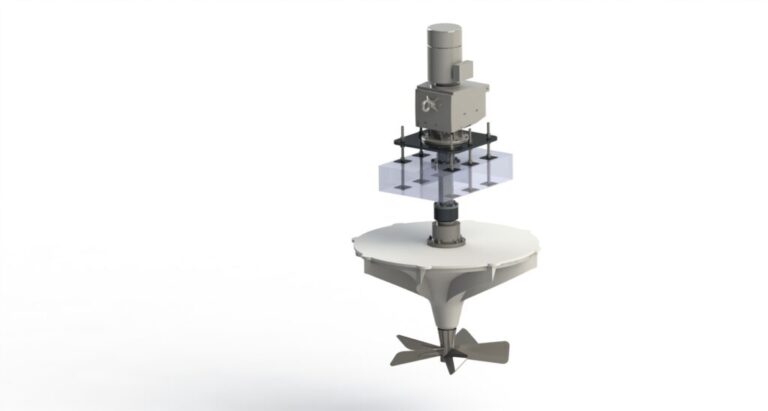
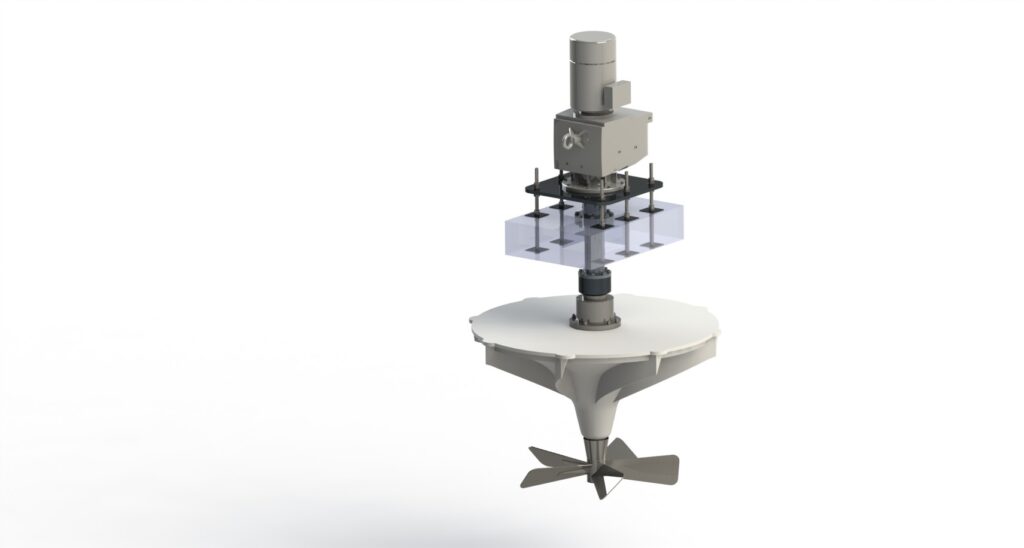
The MOS system is a technological innovation developed and patented by BIOTRADE: a single piece of equipment capable of providing both aeration and mixing of effluents.
Unlike traditional solutions, which require a surface aerator for oxygenation and a submerged mixer for agitation, the MOS system combines both functions in a single unit.
Aeration mode
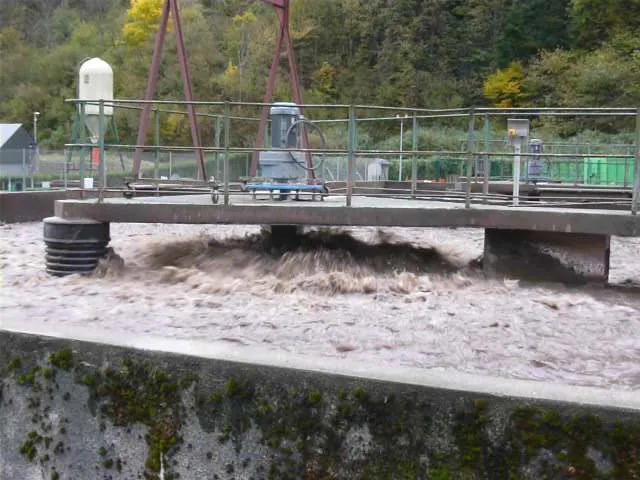
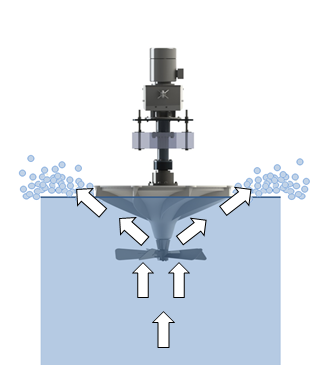
- The rotor and propeller rotate simultaneously, creating a water spray that maximises oxygen transfer between air and water.
- The peripheral speed and spray diameter are optimised to ensure homogeneous oxygenation.
Mixing mode
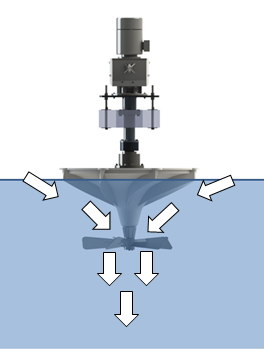
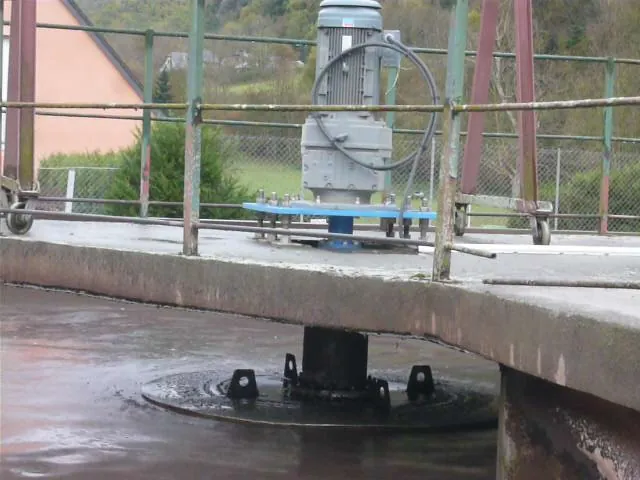
- Thanks to the freewheel system, only the propeller rotates, providing gentle and homogeneous mixing of the basin.
- This mode eliminates the risk of clogging caused by fibrous matter or waste and reduces mechanical stress on the gear motor.
Automatic switching
- The frequency inverter, which is mandatory, allows switching from one mode to the other according to the basin requirements, while optimising energy consumption.
Models
BIOTRADE offers two main configurations of the MOS system:
Fixed MOS system, mounted on a walkway
- Painted steel base plate, fixed to the civil structure using adjustable threaded rods to precisely adjust the immersion depth.
or
- UPN steel profile frame for integration on existing or new walkways.
Ideal for civil engineering basins or installations requiring permanent mounting. Compatible with concrete or steel walkways.
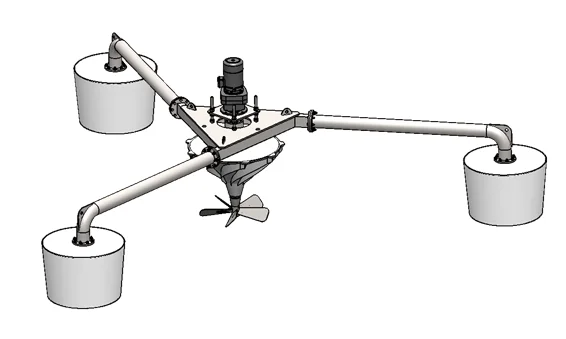
Floating MOS system
Perfect for lagoons, basins without heavy infrastructure, or sites requiring adaptability to water level variations.
Technical Specifications
Gear motor
- Power: 4 to 45 kW, adapted to the basin requirements.
- IE3 energy efficiency class.
- IP55 protection for resistance to weather conditions and humid environments.
- Service factor > 1.75, providing a safety margin for variable loads.
- Mandatory frequency inverter allowing:
- rotation speed adjustment according to biological demand,
- switching between aeration and mixing modes,
- optimisation of energy consumption.
Rotor and propeller
Rotor: glass-fibre reinforced polyester resin or painted steel with RAL 7031 epoxy coating.
Propeller: 304L or 316L stainless steel, designed to withstand aggressive environments and prevent fibrous matter from catching.
The rotor is filled with expanded polyurethane foam, giving it natural buoyancy and exceptional mechanical resistance.
The propeller, with its optimised shape, provides efficient low-speed mixing, around 50 rpm, thereby limiting wear and the risk of breakdown.
Freewheel
- Function: allows the rotor to be disengaged when only mixing is required, leaving the propeller to rotate independently.
Structure and fixing
Fixed version:
- Painted steel base plate fixed to the civil structure using adjustable threaded rods to set the immersion depth.
- UPN steel frame for walkways, providing optimal stability.
Floating version:
- Galvanised steel or stainless steel tripod supporting polyethylene floats filled with polyurethane foam for permanent buoyancy.
- Three-point mooring system, using stainless steel or polypropylene cables, ensuring stability even with water level variations.
- Optional mooring bar for installations subject to large water level fluctuations.
| Criterion | Details |
|---|---|
| Power | 4 to 45 kW |
| Rotor diameter | 800 mm, 1,320 mm, 2,220 mm |
| Minimum water level | 1.5 m to 2.5 m, depending on the model |
| Maximum water level | 4.5 m to 5 m |
| Peripheral speed | 3.5 to 8.9 m/s |
| Spray diameter | 3.6 to 7.9 m |
| Total weight | 390 kg to 2,210 kg, depending on configuration and options |
| Gear motor | IP55, IE3 class, service factor > 1.75 |
| Rotor material | Glass-fibre reinforced polyester resin, density lower than water, or RAL 7031 epoxy-coated painted steel |
| Propeller | 304L or 316L stainless steel, anti-clogging and wear-resistant design |
| Technology | Patented freewheel system allowing alternation between aeration and mixing |
| Frequency inverter | Mandatory for precise control and energy optimisation |