
Slow-Speed Turbine

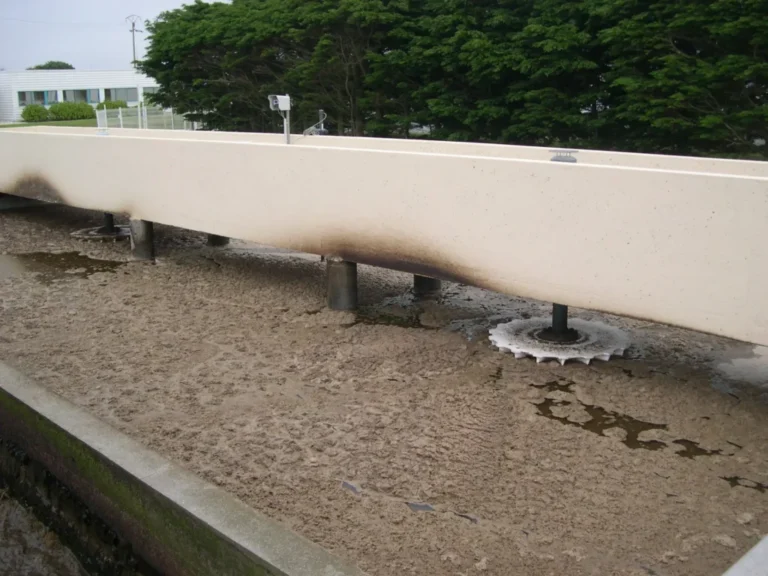
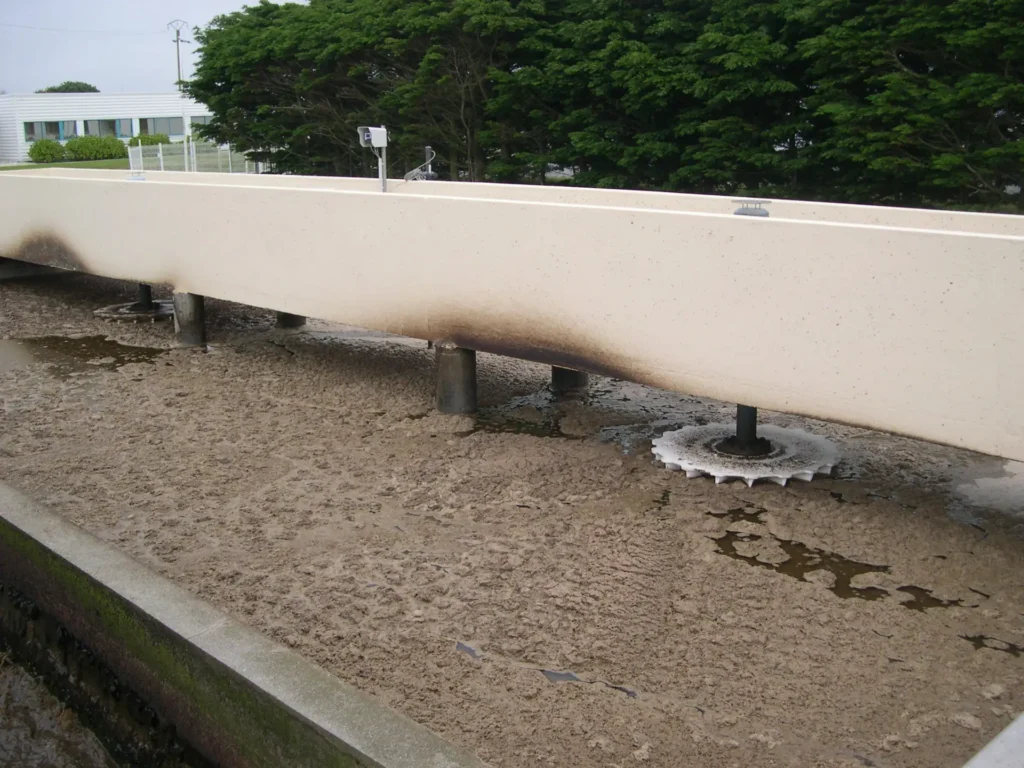
Surface aerator designed for the oxygenation and mixing of municipal or industrial wastewater.


Slow-speed surface turbines provide optimal oxygenation and homogeneous mixing of effluents, both in municipal wastewater treatment plants and in industrial installations.

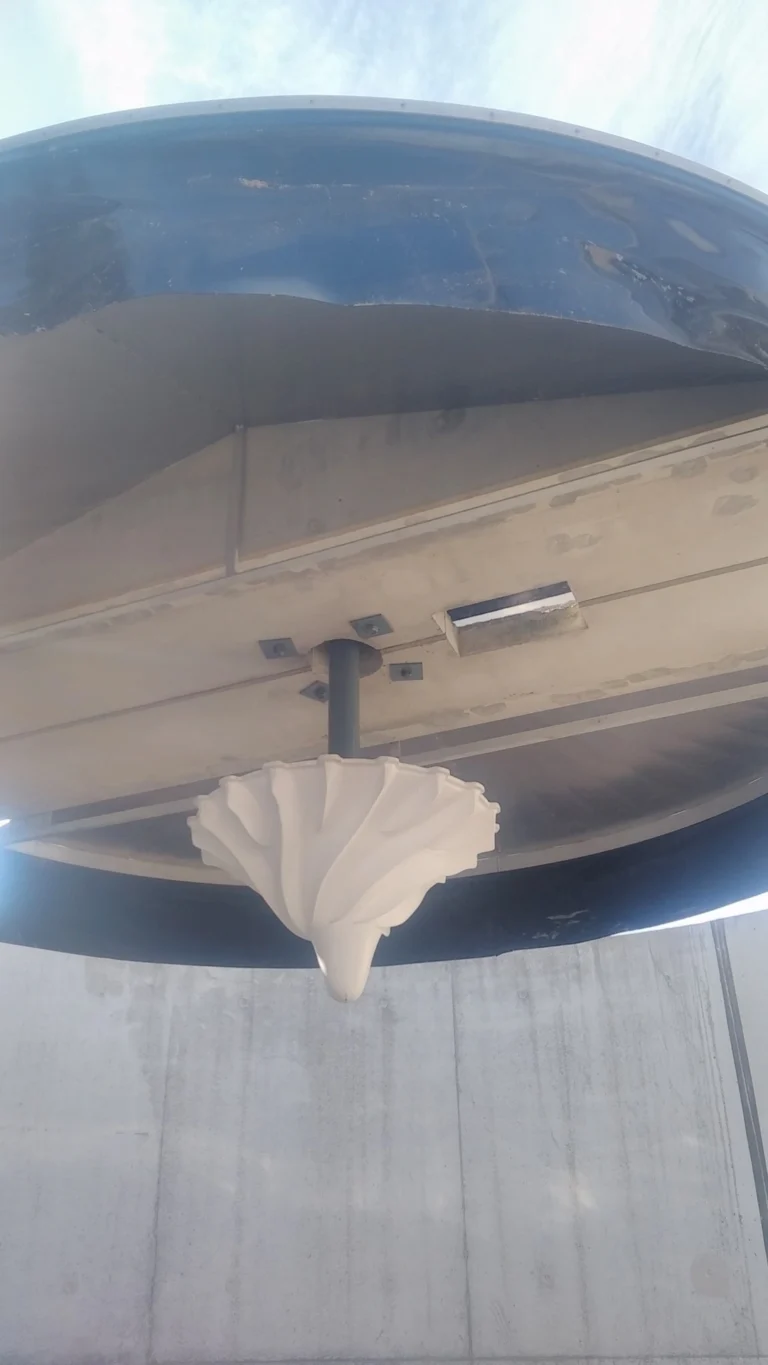
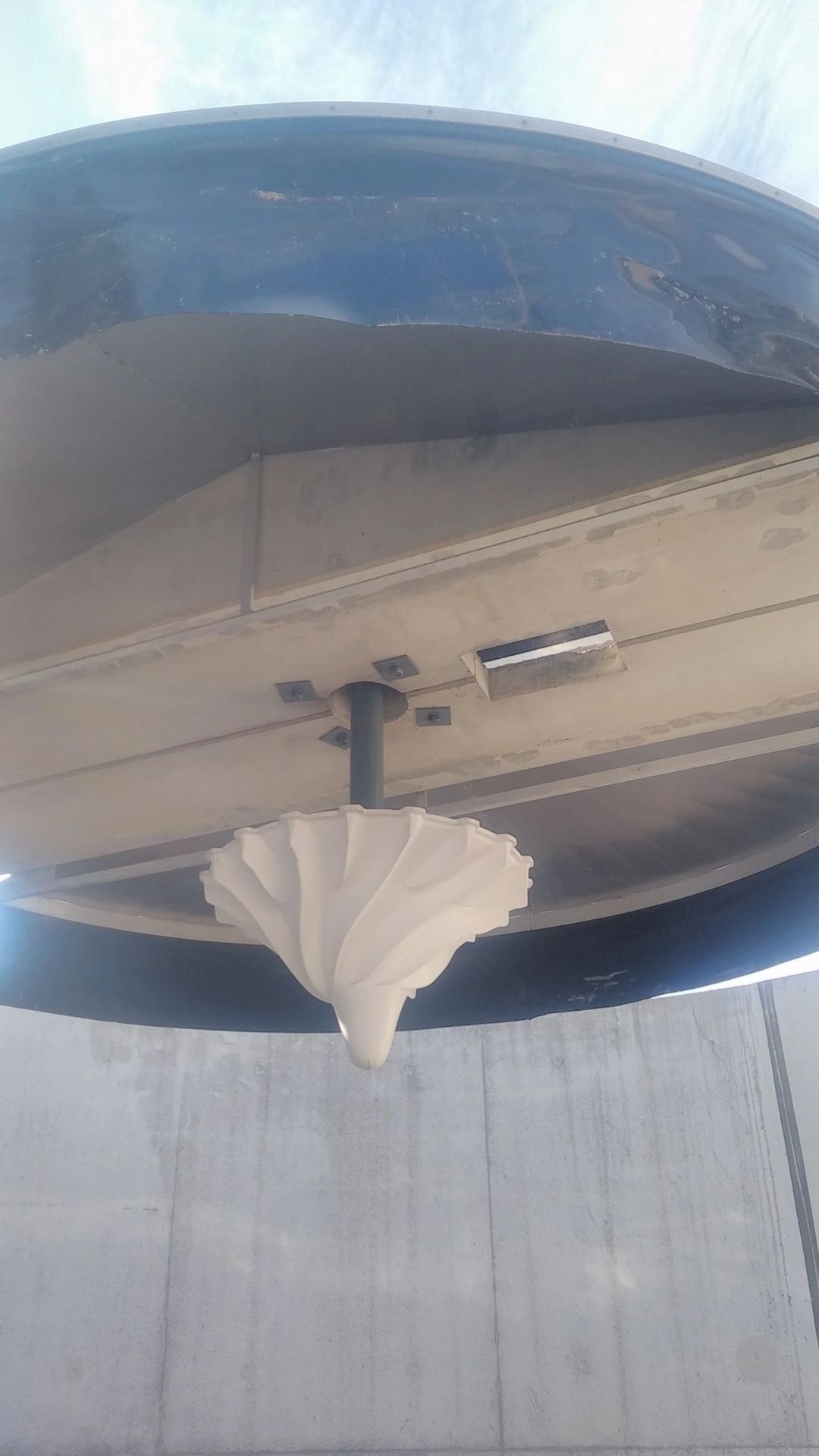
Their operation is based on a vertical shaft: the partially submerged rotor mechanically drives the water and projects it laterally. This movement creates a maximum contact surface between water and air, thereby promoting oxygen transfer.

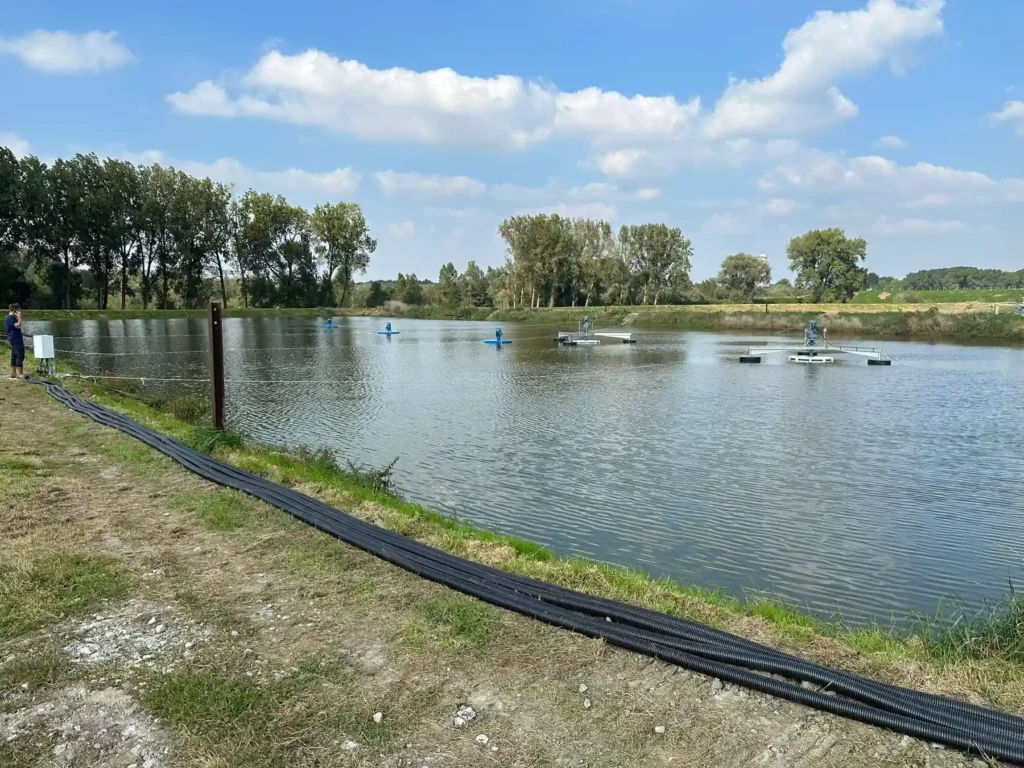
Developed and manufactured in our workshops, these units combine robustness, energy efficiency and ease of operation. They are suitable for civil engineering basins as well as lagoons, and are available in fixed versions mounted on a walkway or in floating versions.

BIOTRADE offers a complete range of slow-speed turbines adapted to all requirements.

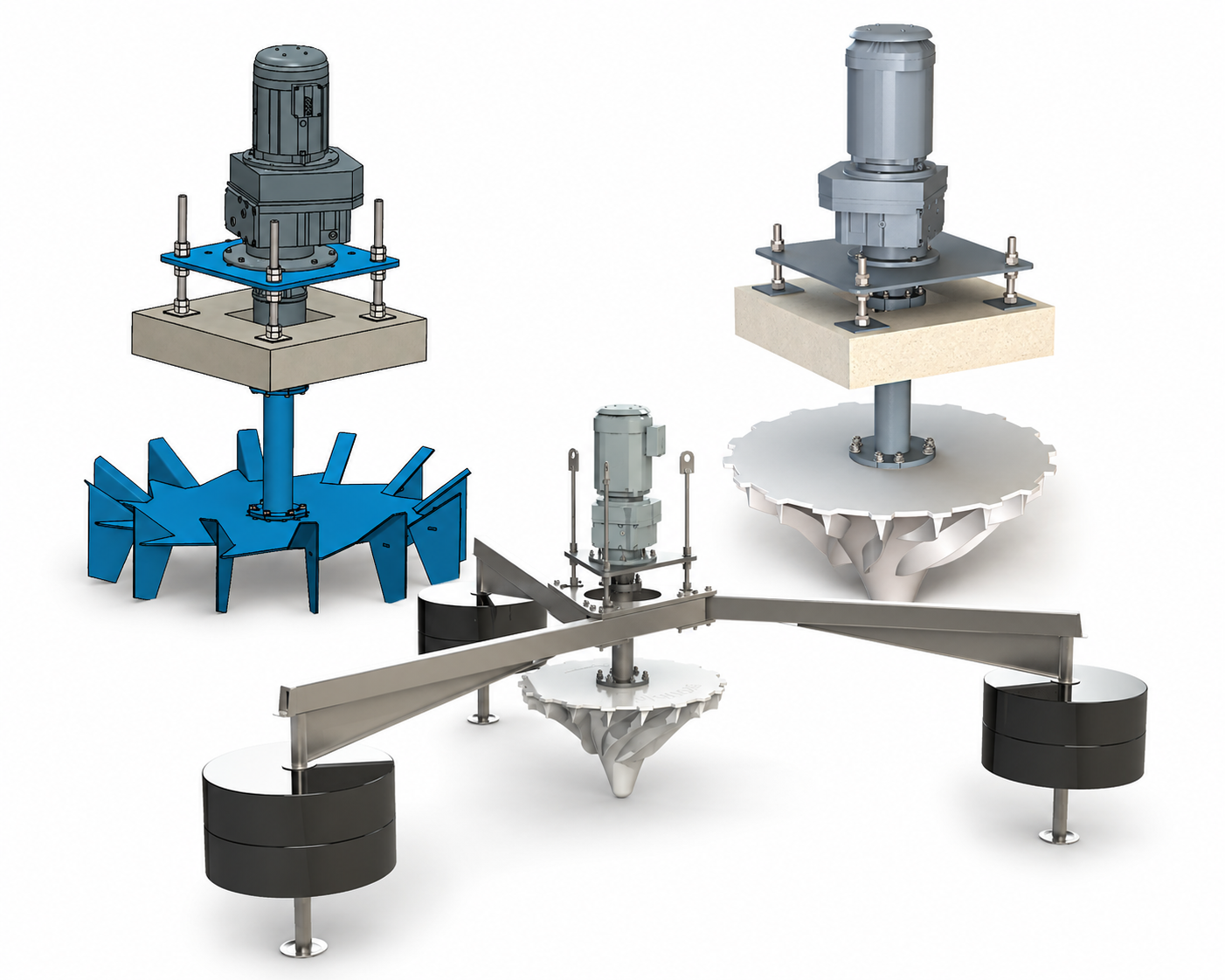
Fixed slow-speed turbine

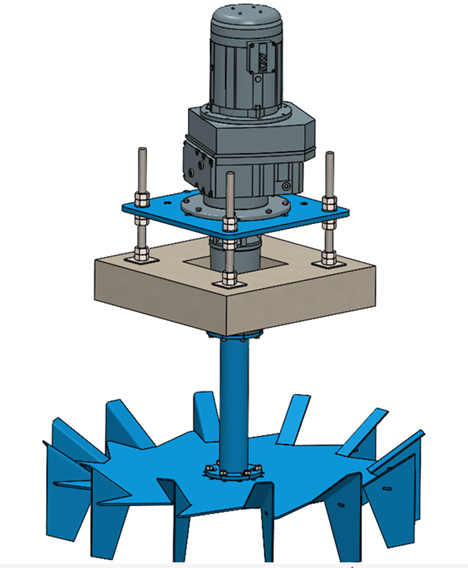
  • Rotor made of glass-fibre reinforced polyester or painted steel with high-resistance epoxy coating.
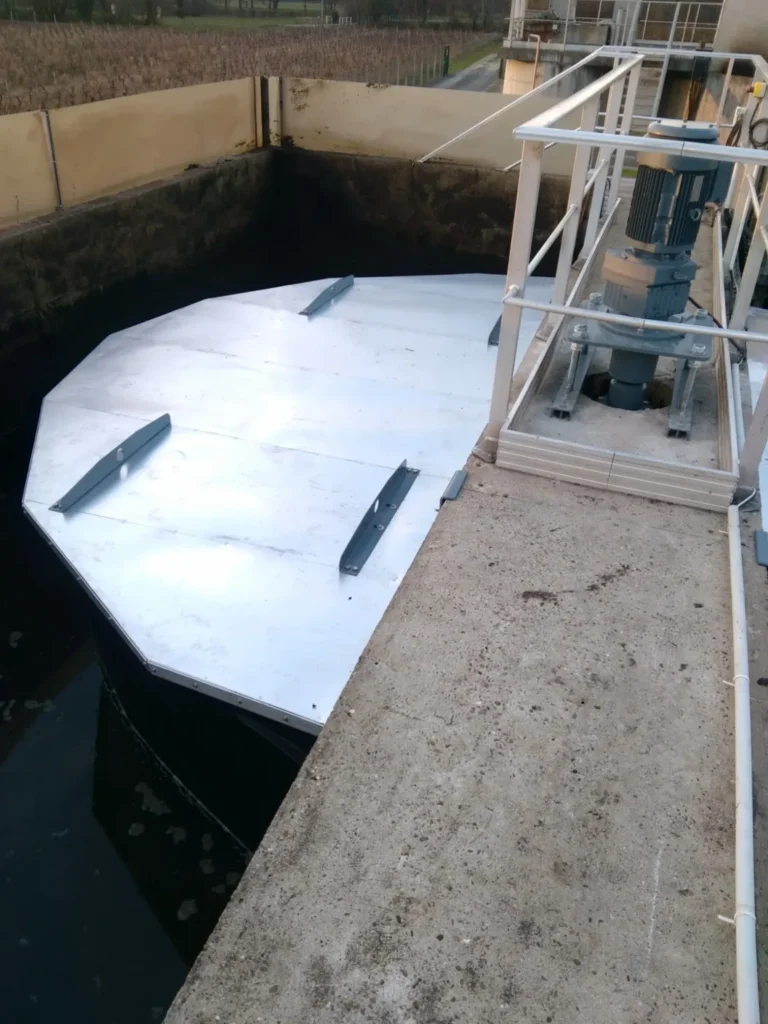
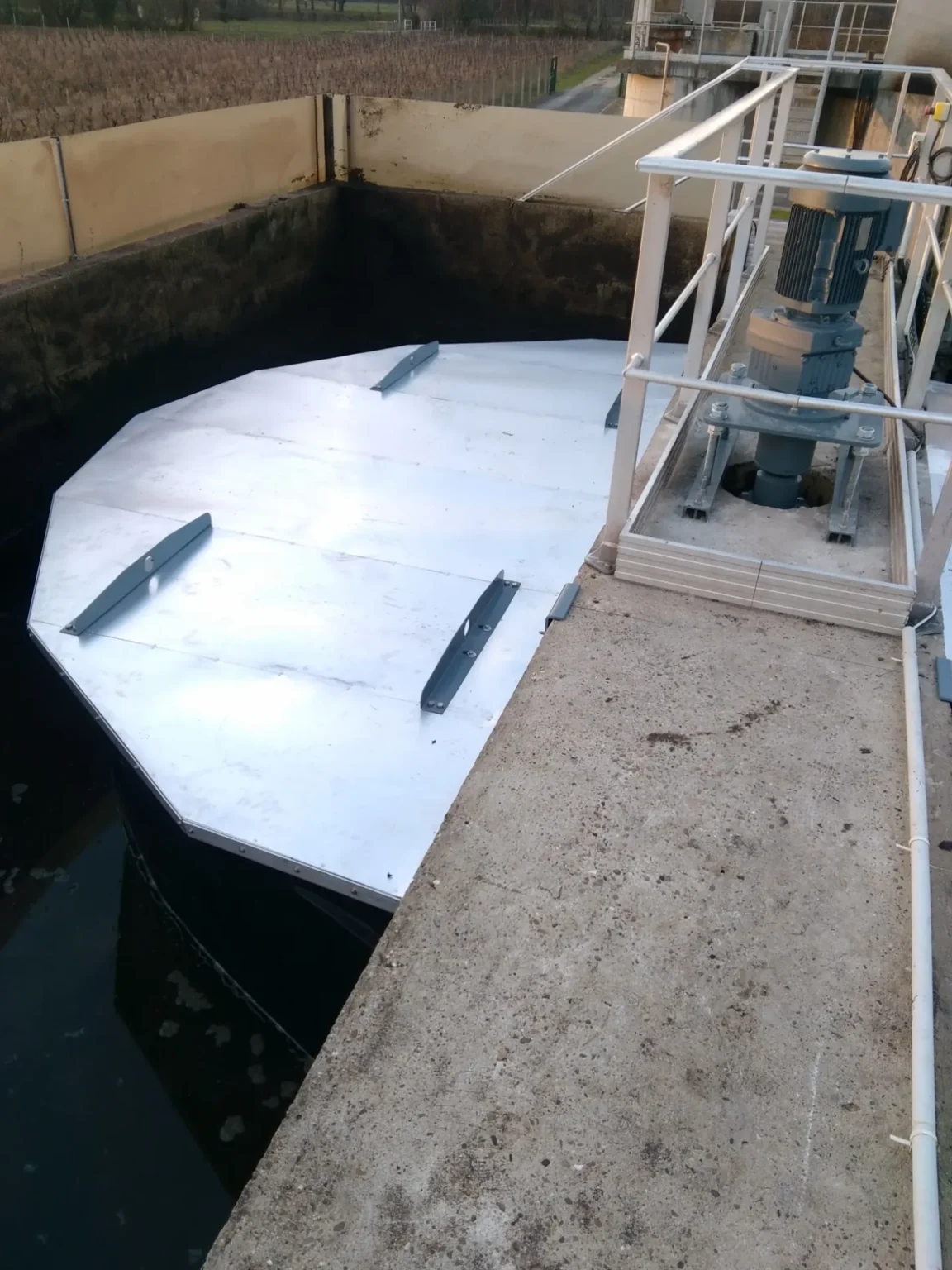
  • Mounted on a height-adjustable base plate using threaded rods, allowing precise immersion adjustment.
  • Ideal for permanent installations on concrete or steel walkways.

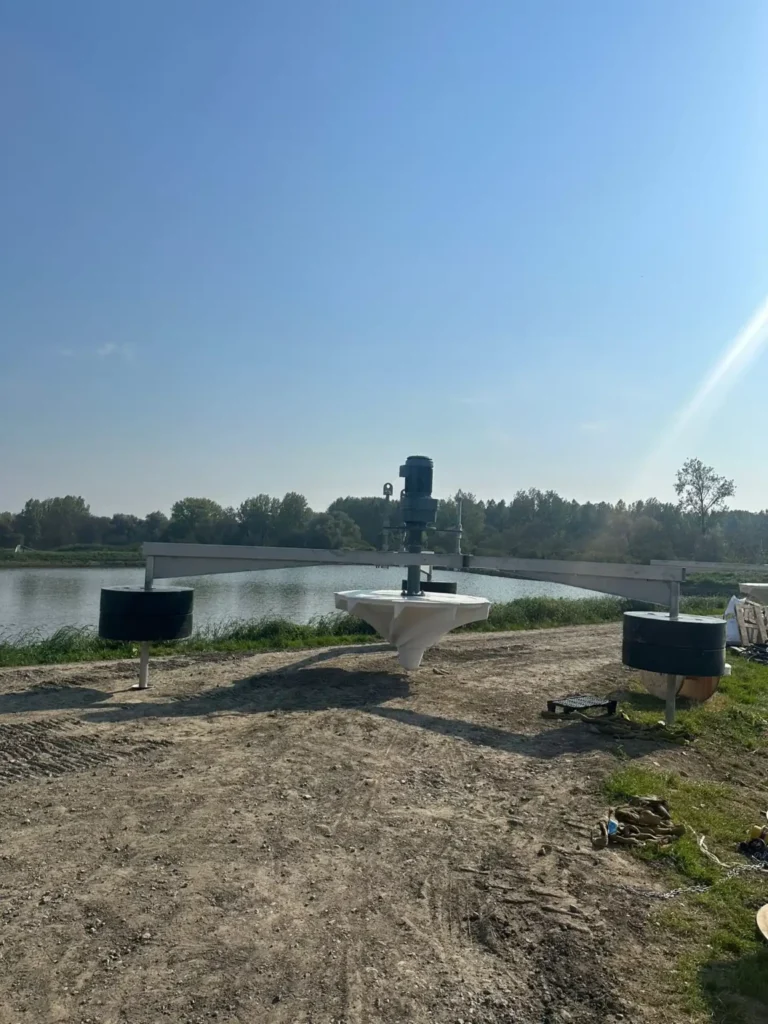
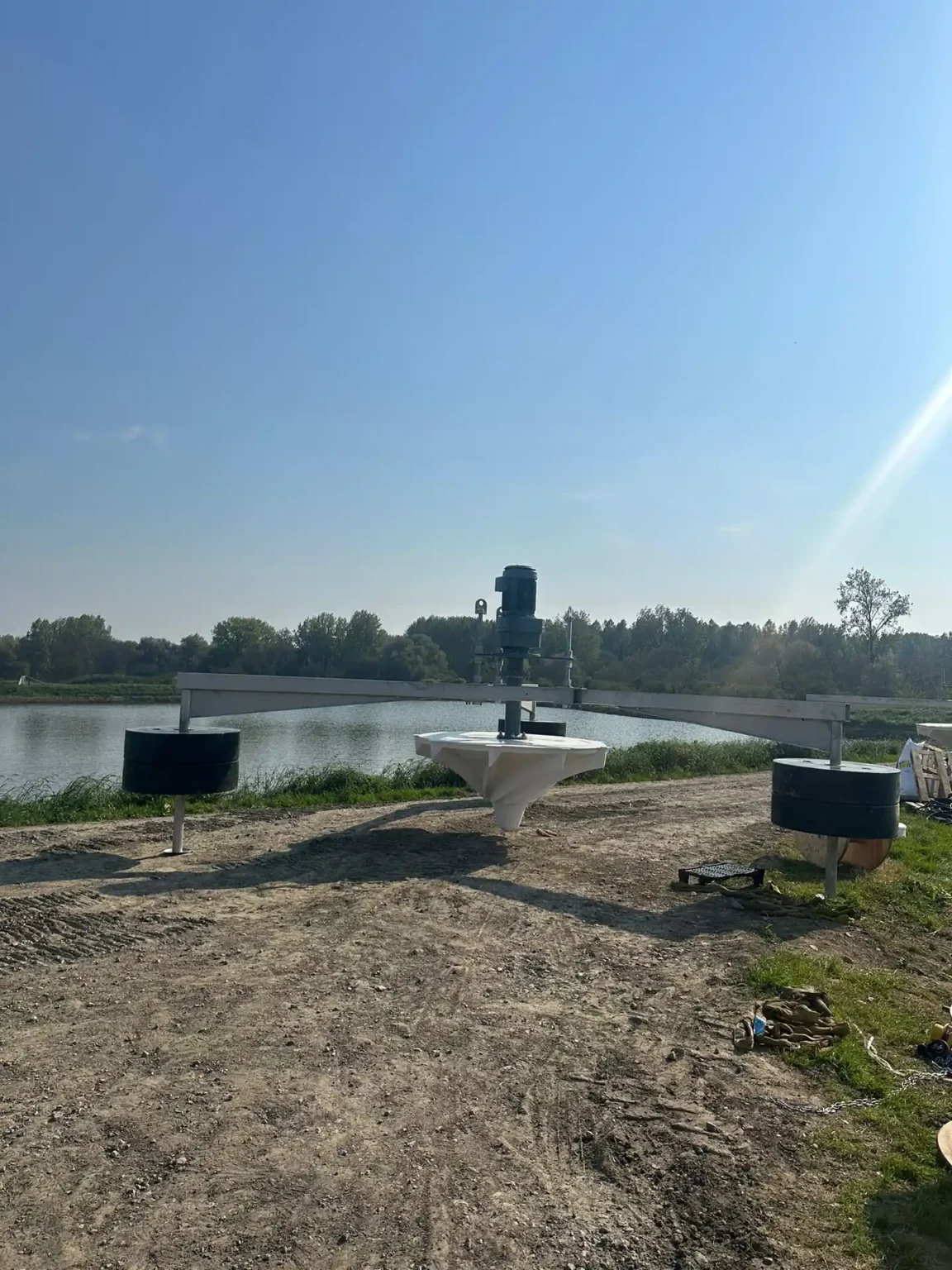
Floating slow-speed turbine

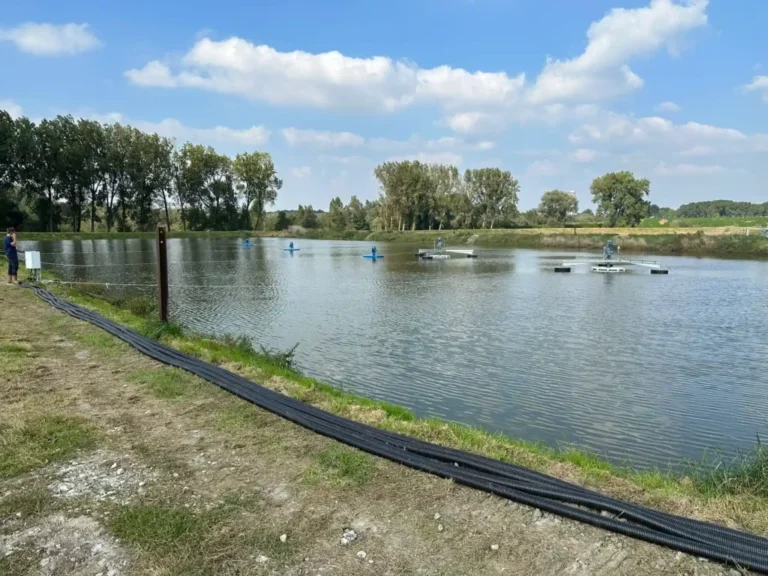
Perfectly suited for lagoons and basins.

Rotor made of glass-fibre reinforced polyester or painted steel, mounted on a floating tripod with polyethylene floats filled with polyurethane foam.

Three-point mooring system using stainless steel or polypropylene cables, ensuring optimal stability even when water levels vary.

  • Slow-speed turbine assembly.
  • IP55 gear motor, IE4 class, service factor > 1.75.
  • Shaft and support plate: epoxy-coated painted steel, RAL 7031, or 304 / 316L stainless steel.
  • Rotor :
    • Made of glass-fibre reinforced polyester filled with unsinkable expanded polyurethane foam, or painted steel with a three-step anti-corrosion surface treatment.
    • Designed for optimal mixing and long service life.
  • Floats, for the floating version: high-resistance polyethylene with foam-filled interior.
  • Bolts and threaded rods: A2 / A4 stainless steel or galvanised steel.
Power2.2 to 110 kW
Rotor diameterFibreglass: 800 mm, 1,320 mm, 2,220 mm / Steel: 1,900 mm, 2,200 mm
Water level
Min.: 1.5 m to 2.5 m / Max.: 3 m to 4.5 m, depending on model
Peripheral speed3.5 m/s to 8.9 m/s
Spray diameter3.6 m to 10 m, adapted to the power rating

Interested in this model?

Get detailed technical documentation or a personalised quote for your project.

  • Powerful mixing, ensuring effluent homogenisation even in deep basins, up to 4.5 m.
  • Durable materials with high corrosion resistance.
  • Simplified maintenance with easy access to the gear motor.
  • Glass-fibre reinforced polyester rotor with a density lower than water, making installation and maintenance easier even when the basin is full.
  • Acoustic enclosure, with or without access door, to reduce noise emissions.
  • Anti-splash cover to limit aerosols, with a recommended distance of 200 mm to 300 mm above the static water level.
  • Floating maintenance walkway for safe access to the equipment.
  • Mooring kit: stainless steel cables with dynamometric spring or polypropylene ropes.
  • 316L stainless steel tripod arms for aggressive environments.
  • Special lantern for long shaft lengths, over 1,200 mm.
  • Single-point lifting assembly.
  • Mooring bar for floating turbines installed in basins subject to significant water-level variations, helping guide and stabilise the turbine during vertical movements.

When should a slow-speed turbine be used?

A slow-speed turbine is suitable for aeration basins or lagoons requiring intensive mixing and homogeneous oxygenation, in both wastewater treatment plants and industrial applications.

What are the manufacturing lead times?

Manufacturing lead times are 10 to 12 weeks after approval of the drawings. The preparatory phase, including dimensional surveys and technical studies, takes approximately 2 weeks on average.

When should a turbine with a reinforced long hub be installed?

A special lantern for long shafts is required when the distance between the top of the concrete slab or walkway and the water level is equal to or greater than 1,200 mm.

Is it possible to keep the existing threaded rods?

Yes, provided that they are at least the same size as those specified in BIOTRADE standards. A technical inspection is required.

How is the turbine fixed in place?

In the fixed version, the turbine is mounted on an adjustable base plate using threaded rods anchored into the civil structure. In the floating version, it is secured by a three-point mooring system with stainless steel or polypropylene cables, shackles and cable clamps.

How can nuisance such as noise and aerosols be reduced?

Nuisance can be reduced with an acoustic enclosure offering sound reduction of up to 80 dB, and with an anti-splash cover fitted with a neoprene or aluminium skirt.

Are anti-vortex systems required?

Yes. Vortices reduce mixing efficiency, decrease oxygen transfer performance and may damage the equipment. If no anti-vortex system was included during basin construction, BIOTRADE can provide anti-vortex panels adapted to the turbine power rating.