
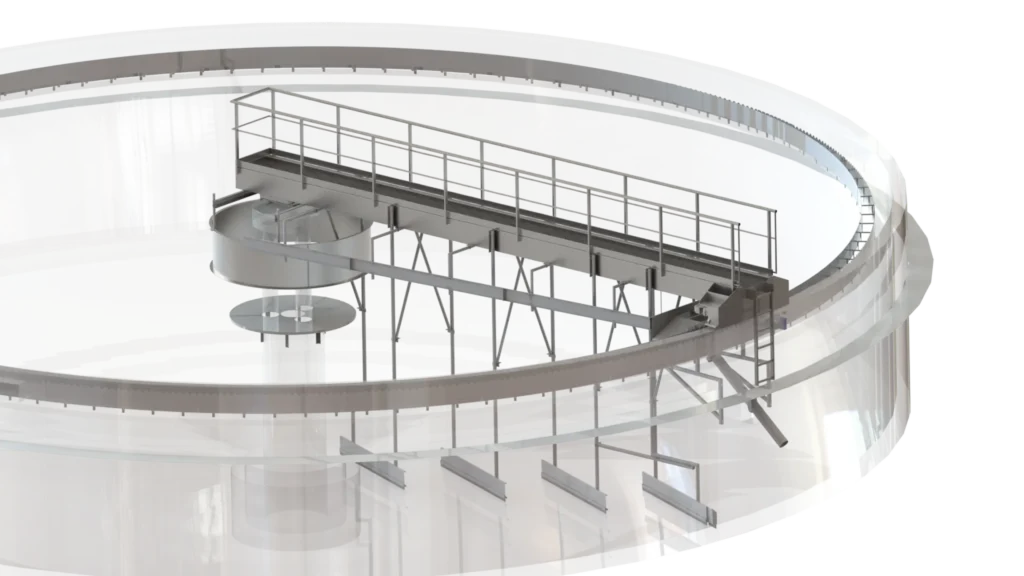
Scraped-surface clarifier

Scraped circular clarifier for municipal or industrial wastewater.


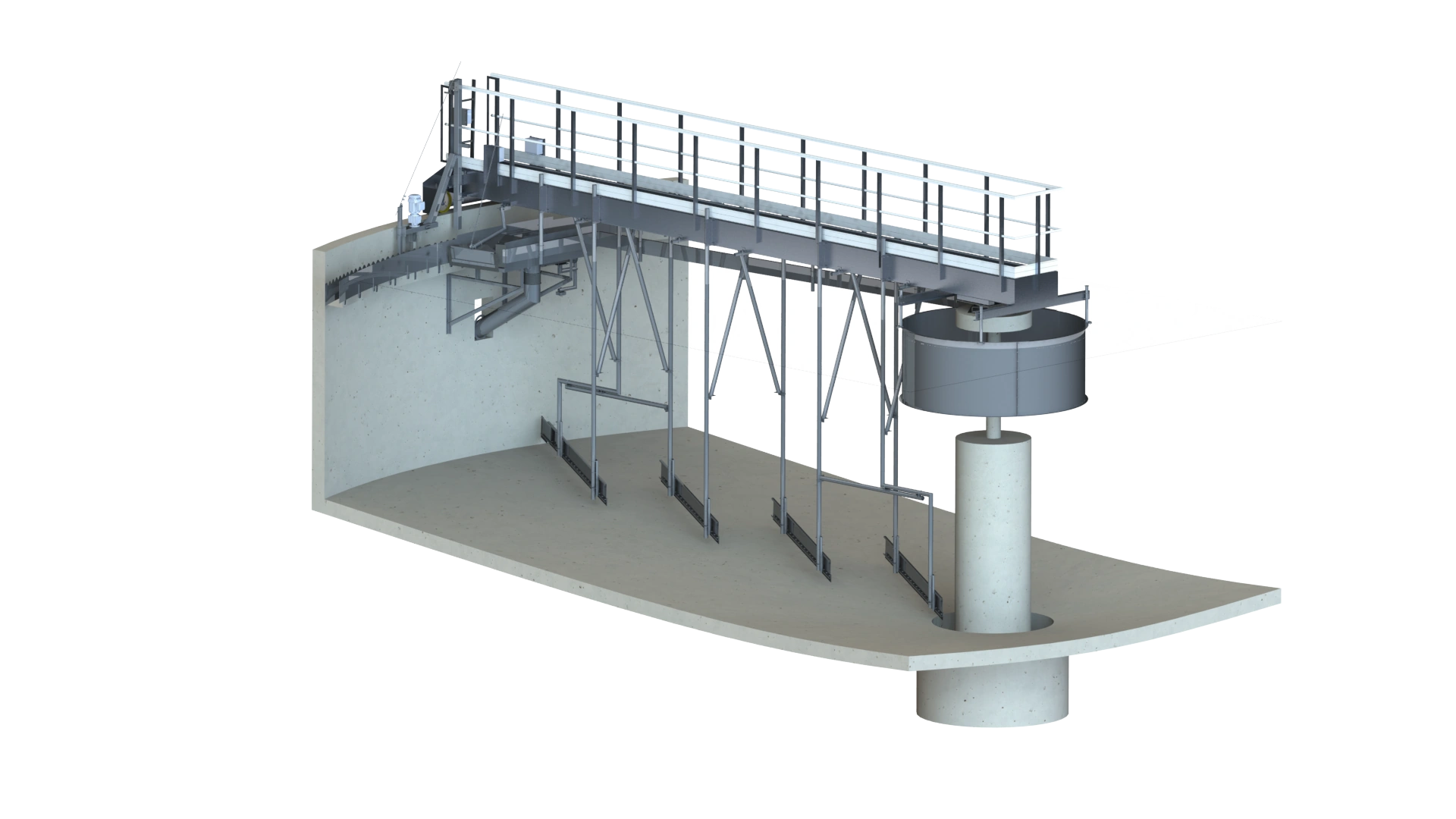
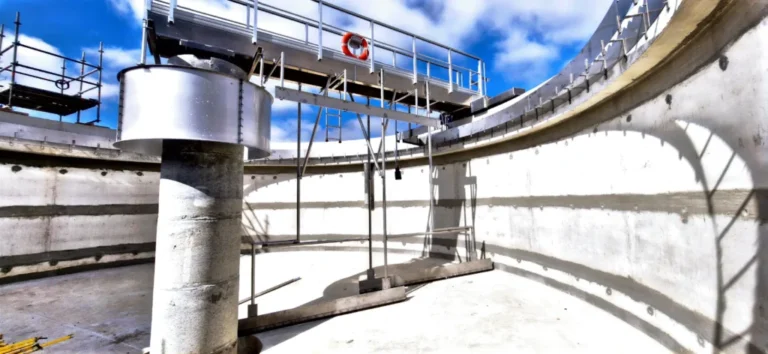
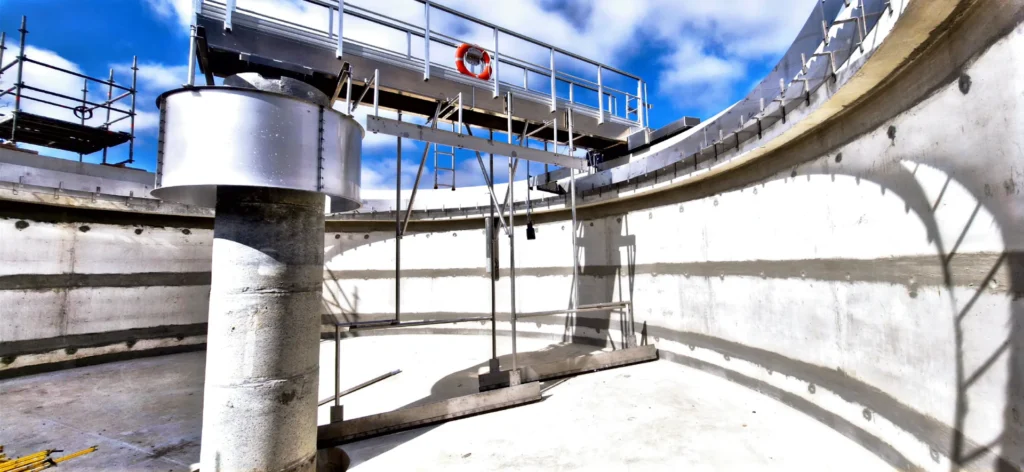
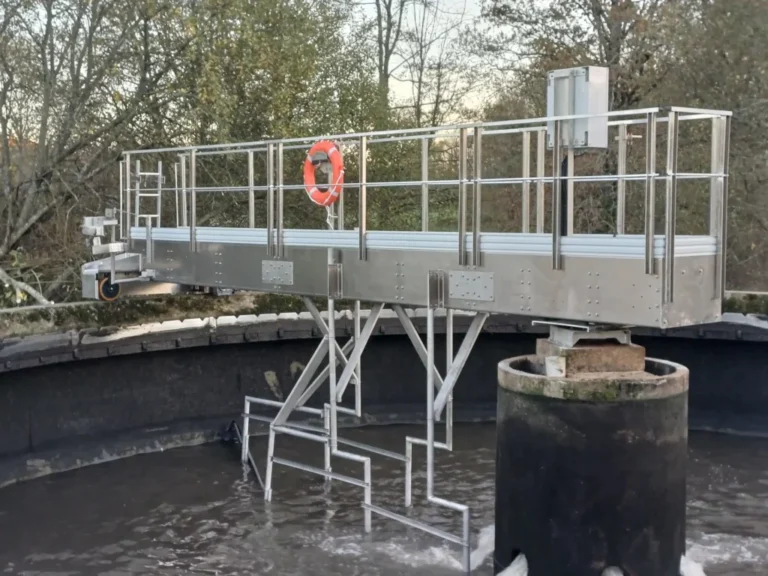
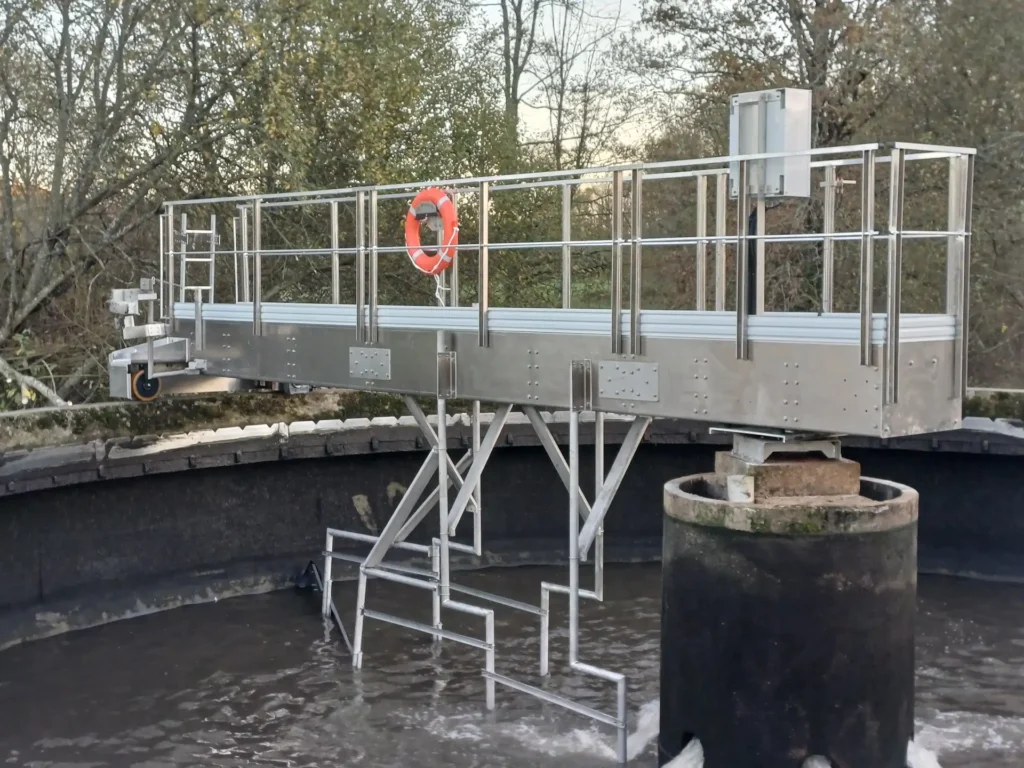
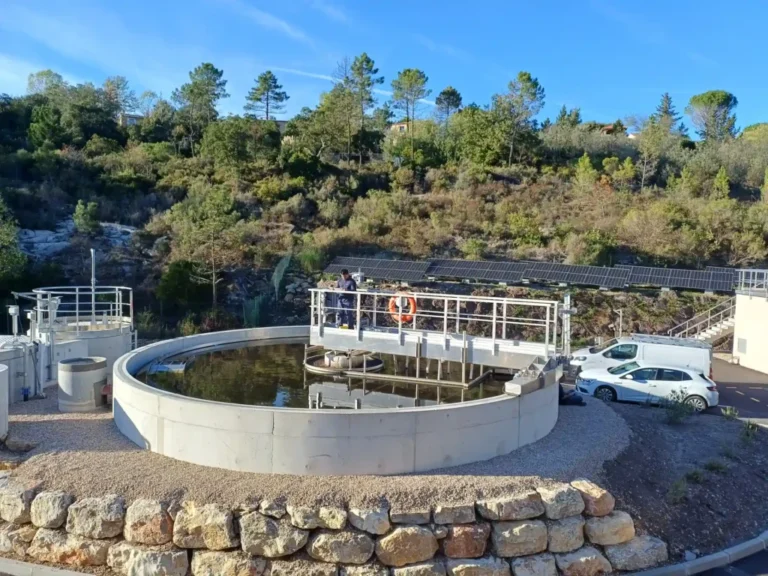
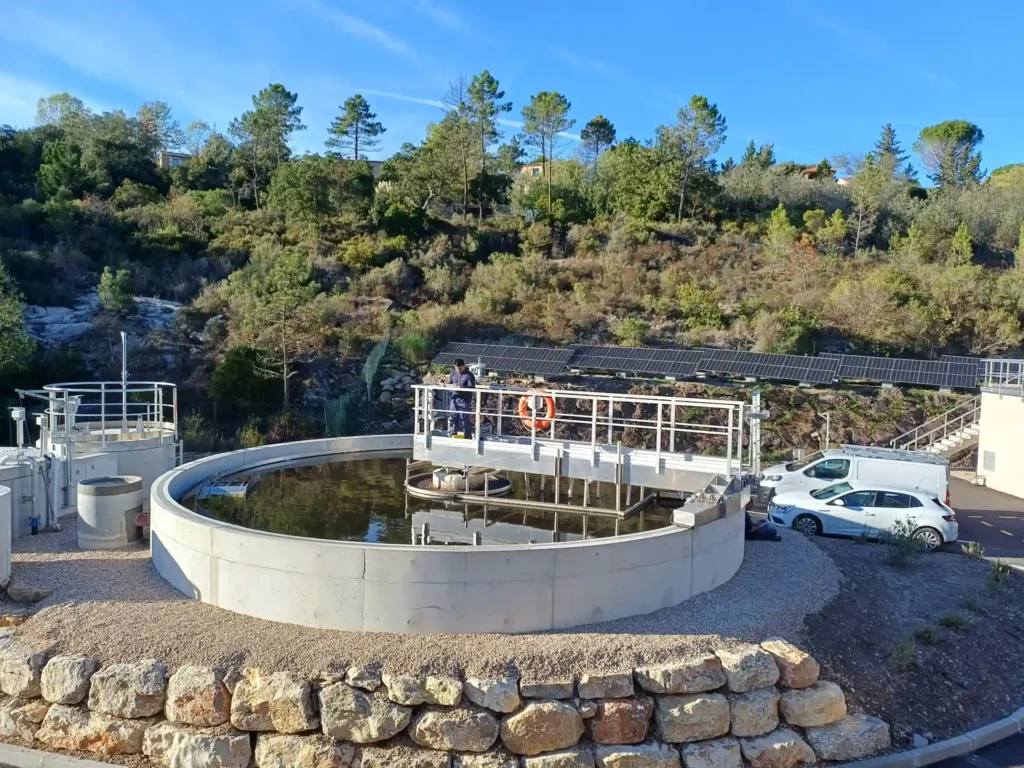
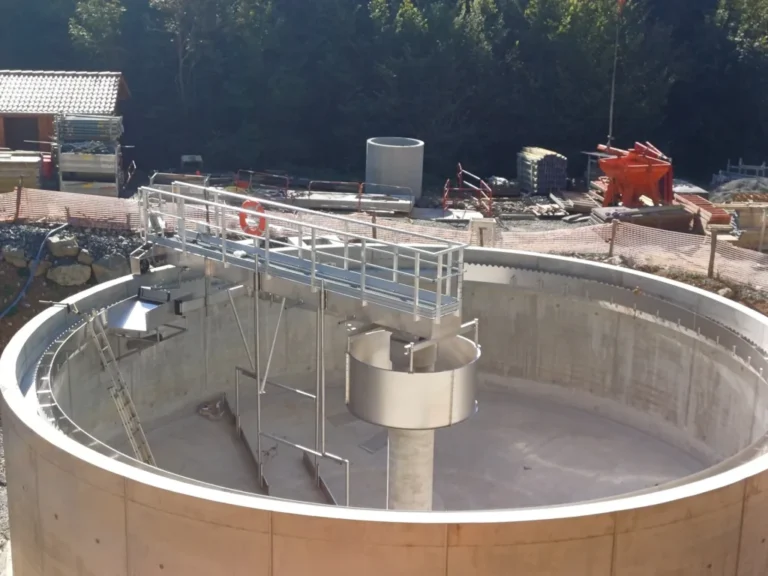
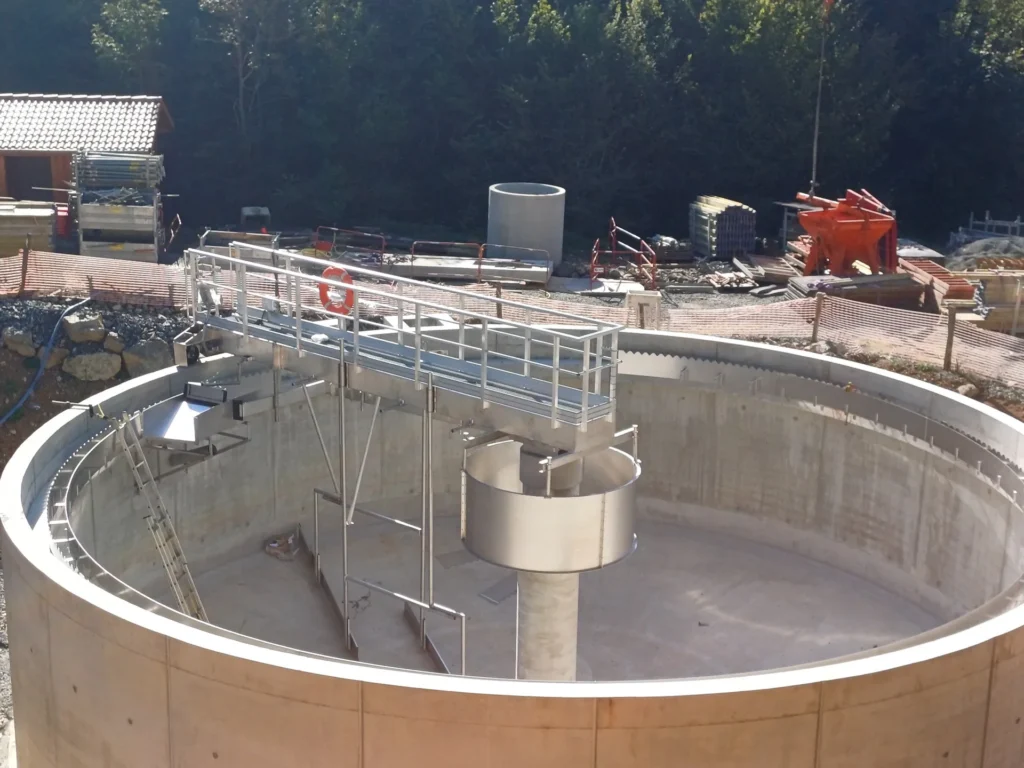
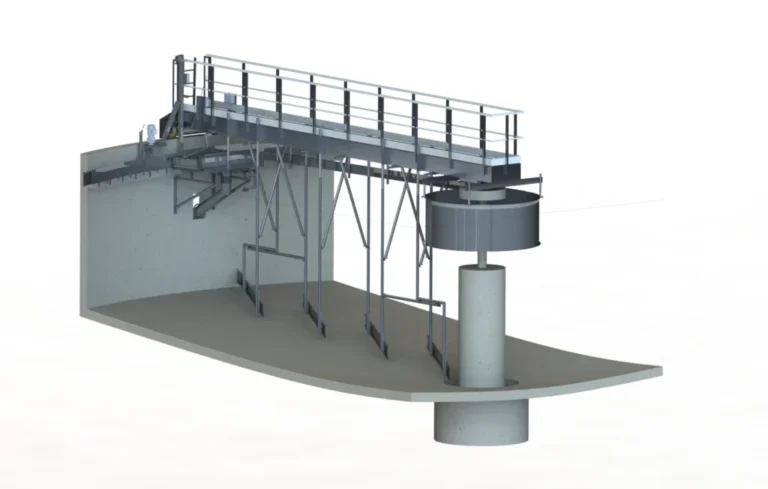
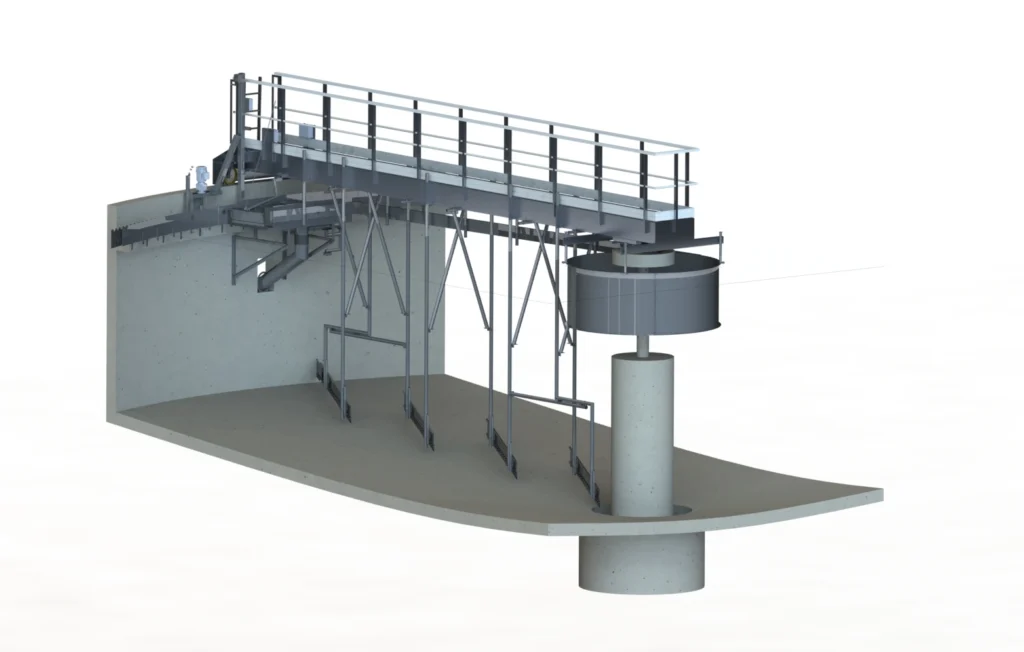
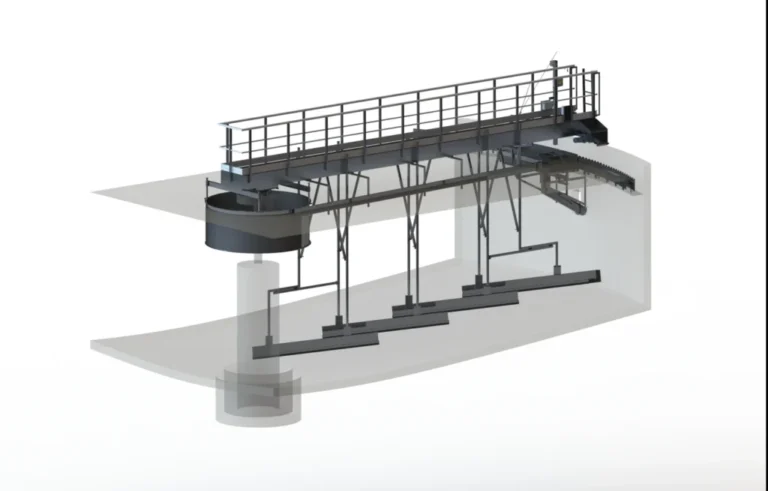
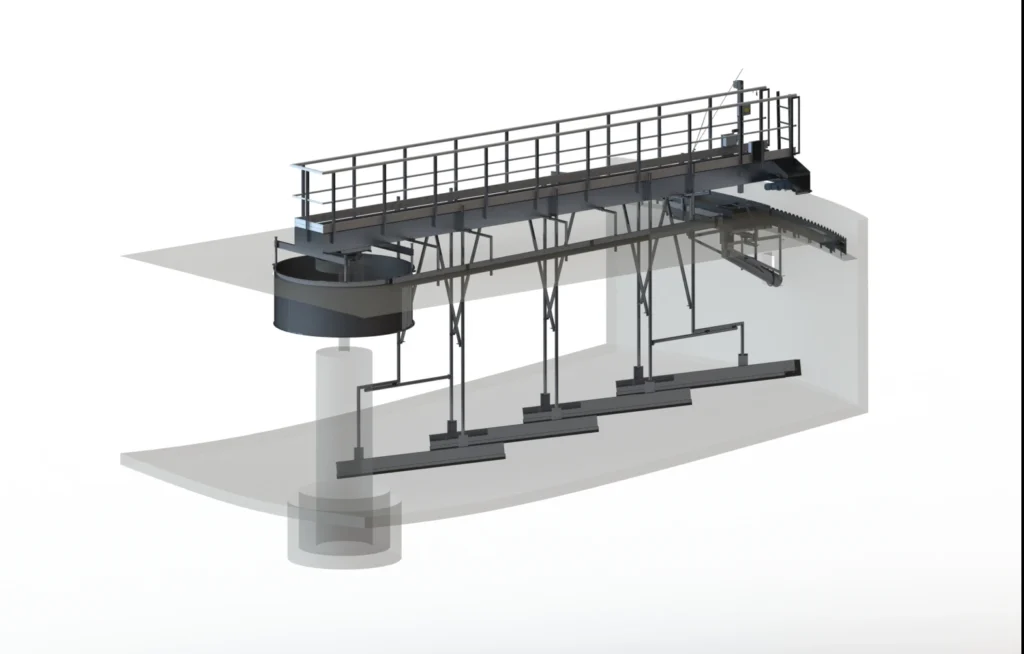
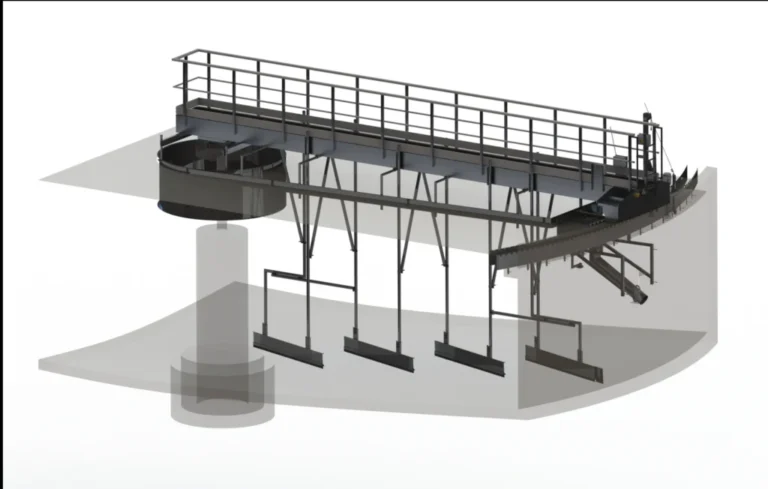
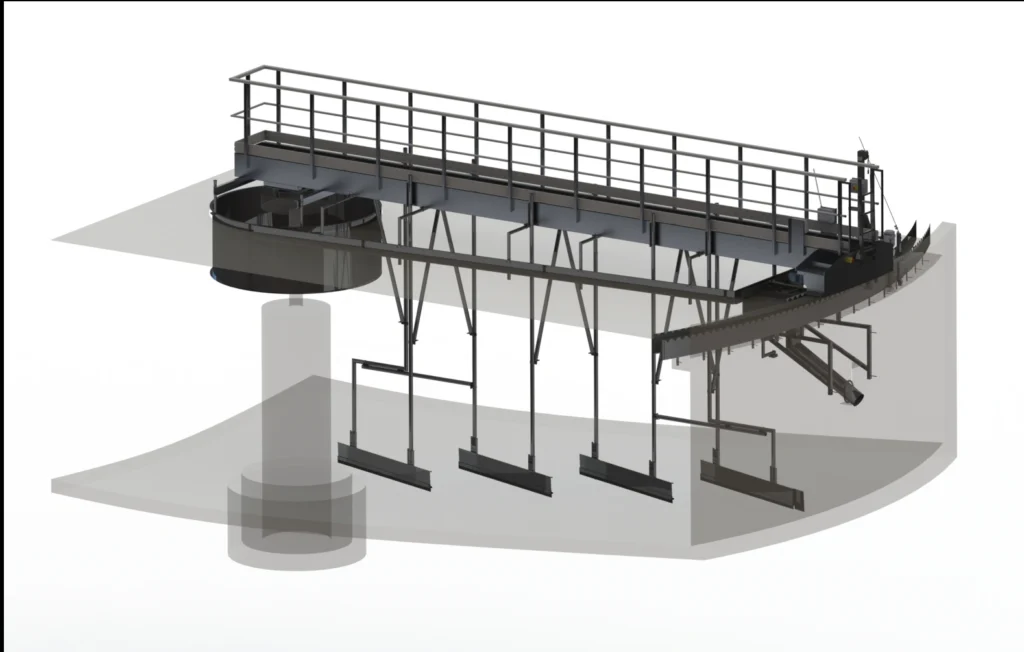
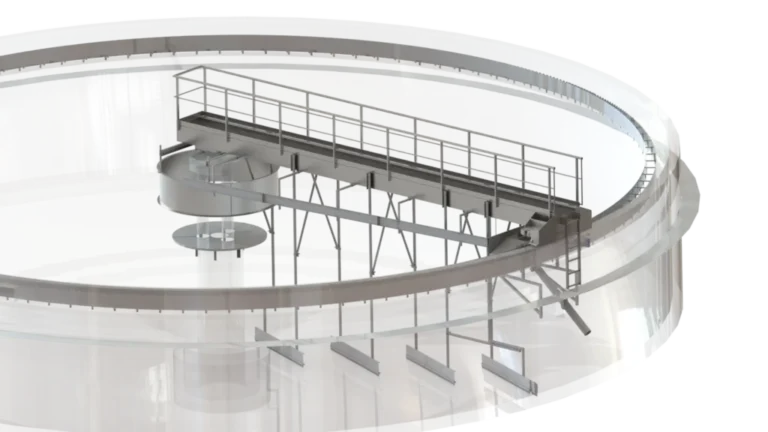
The BIOTRADE scraper clarifier is designed for the clarification of municipal or industrial wastewater. The system features a peripheral-drive radial bridge, with a scraper blade suspended from a bridge-like structure. The bridge rotates around the tank’s central axis, pushing the sludge toward a central hopper for optimal removal.

Manufactured in BIOTRADE’s workshops, this clarifier is suitable for tanks of any diameter or configuration. It is engineered to deliver optimal scraping performance while ensuring maximum durability and robustness.

BIOTRADE markets scraper clarifiers for clarification tanks of all diameters, with configurations tailored to specific customer needs: radial, radial +1/3, and diametral.

BIOTRADE scraper clarifiers consist of the following components:

  • Bridge: Available in aluminum, galvanized steel, painted steel, 304L/316L stainless steel, or duplex steel (customer’s choice). Its lightweight design reduces energy consumption while ensuring optimal robustness.
  • Geared motor: IE3 for energy efficiency.
  • Vulkollan wheel: Offers a longer service life than standard polyurethane.
  • Submerged stainless steel structure: Designed for long-term durability and efficient bottom scraping.
  • “Ski-jump” hopper: Compatible with all types of civil engineering designs; engineered to minimize snagging and ensure equipment longevity.
  • Electrical connection or control cabinet (depending on requirements).
  • Trough cleaning system: Uses static brushes.
  • Electrical slip ring assembly: Number of rings determined by selected options.
  • Clifford or diffusion skirt: Ensures uniform effluent distribution.
  • Surface skimmer: Directs floating matter toward the hopper.
  • Central pivot: Features a 304L stainless steel base plate (316L on request) and a slewing ring.
  • Weir and siphon blades: Made of 304L stainless steel (316L on request) for optimal clarified water discharge.
  • Obstacle/debris detector: Protects the equipment in the event of a blockage.

Interested in this model?

Get detailed technical documentation or a personalised quote for your project.

  • Adaptability: custom design to suit all types of civil engineering structures.
  • Safety: integrated safety equipment, including buoys, boat hook and lifeline.
  • Simplified maintenance: design focused on easy operation and maintenance.
  • Immersed side ladder: for safe access to the basin.
  • Access ladder and/or gate: facilitates access to the bridge.
  • Torque limiters: electronic or mechanical, Dynalarm type, to protect the gear motor.
  • Infrared lamp: for de-icing the running track.
  • Motorised brush: for efficient trough cleaning.
  • Sludge blanket sensor support: for accurate sludge monitoring.
  • Safety equipment: buoys, boat hook and lifeline for operator safety.
  • Rotation detector, anti-slip device: stops the bridge if the idle wheel does not rotate within the set time.
  • Stop function with parking position: stops the bridge at a precise position at the end of the cycle.
  • Floating matter spraying system: prevents the formation of compact foam.
  • Central deflector: ensures a calmer water inlet under the Clifford.
  • Pressurised water trough cleaning: for optimal maintenance.
  • Walkway width: 800 mm, 1,000 mm or 1,200 mm depending on requirements.
  • Stainless steel clear water discharge trough.
  • Industrial wastewater suction system.

What materials are available?

BIOTRADE offers a wide range of materials: aluminium, galvanised steel, painted steel, 304L or 316L stainless steel, duplex steel and marine-grade aluminium.

What are the manufacturing lead times?

The manufacturing lead time is 14 weeks from approval of the drawings by the client. Drawings are usually issued approximately 2 weeks after validation of the requirements.

What are the advantages of the Vulkollan wheel?

The Vulkollan wheel offers a longer service life than polyurethane. It also provides greater robustness and improved durability.

What is the difference between the rotation detector and the parking position?

The rotation detector, also known as the anti-slip device, is a sensor located at the idle wheel. It detects whether the wheel has completed a full rotation within a defined time. In the event of blockage or slipping, the system automatically stops the bridge. The parking position detects the complete rotation of the bridge around the basin and allows precise stopping at the end of the cycle.